
3 Days in Rome: The Ultimate Itinerary for Aussie Travellers

Planning a trip to the Eternal City? Packing your bags for Rome means preparing for a whirlwind of breathtaking history, jaw-dropping art, and pasta that will change your life. But before you touch down at Fiumicino Airport, there is one modern travel essential you cannot leave behind: a reliable eSIM for Italy.
With an AussieRoam eSIM, you can skip the long queues for local physical SIM cards and avoid the nightmare of global roaming fees. Instead, you'll have instant, high-speed data the second you land, allowing you to seamlessly navigate Rome’s ancient cobblestone streets, look up restaurant reviews on the go, and upload your travel snaps in real-time.
Here is our tried-and-tested 3-day itinerary packed with incredible tours, hidden gems, and delicious bites, inspired by our recent journey.

Day 1: Ancient Wonders & Gladiators
Start your Roman holiday by stepping back in time. You can’t visit Rome without exploring the iconic Colosseum.
What We Did: We highly recommend booking a guided tour that includes access to the inner corridors. Walking through the monumental stone arches where gladiators once prepared for battle is an unforgettable experience.
Top Tip: Right outside the Colosseum, you’ll get a brilliant elevated view of the Arch of Constantine. Make sure your AussieRoam eSIM is active so you can instantly download your digital entry tickets and look up the fascinating history of these ancient structures!
Where to Eat: Skip the tourist traps directly facing the monuments. Walk a few blocks into the charming Monti neighbourhood for an authentic Cacio e Pepe or Carbonara at a local osteria.

Day 2: The Wonders of Vatican City
On day two, cross the Tiber River into the smallest independent state in the world: the Vatican.

The St. Peter's Approach: Walking down the Via della Conciliazione brings you face-to-face with the spectacular facade and dome of St. Peter’s Basilica. The sheer scale of the crowds here makes it essential to stay connected so you don't lose your travel companions.

Gorgon Medusa medallion The Vatican Museums: Inside, prepare to be absolutely dazzled. You will marvel at the masterfully preserved ancient mosaics, such as the mosaic floor with the Gorgon Medusa medallion at the Sala Rotonda, and wander through the breathtaking Gallery of Maps, where the golden, intricately painted ceiling stretches as far as the eye can see.

Gallery of Maps Masterpieces in Marble: The sculpture galleries house some of the world's most famous art, including the monumental Laocoön and His Sons wrestling giant sea serpents. The statue was lost for centuries until it was rediscovered in Rome in 1506, unearthed on the Esquiline Hill near the site of Nero's palace. Michelangelo was reportedly among those summoned to inspect the find. Pope Julius II acquired it almost immediately and placed it in the Vatican's Belvedere Courtyard, where it became one of the most influential and copied sculptures in Western art, shaping Renaissance and Baroque depictions of the human body in agony.
One of Laocoön's arms was missing upon discovery and was long restored outstretched; in the 20th century, the original bent-arm fragment was identified and reattached, more closely matching its appearance today in the Vatican Museums' Pio-Clementino collection.

Laocoön and His Sons A Spiritual Stop: Take a moment of quiet reflection inside the basilica's smaller chapels to admire the incredibly detailed gold altarpieces and sacred icons, such as the Altar of Our Lady of the Column (Madonna della Colonna). The image is a Marian icon originally painted on a column of Porta Santa marble from the Old St. Peter's Basilica, set into this marble frame by Giacomo della Porta in 1581, and installed on this altar in 1607. Pope Paul VI later gave the image the title "Mater Ecclesiae" (Mother of the Church) in 1964, and a mosaic copy hangs on the facade of the Apostolic Palace facing St. Peter's Square. The "UNUM EX VII ALTARIBUS" inscription above identifies it as one of the seven privileged altars, associated with an old indulgence tradition.
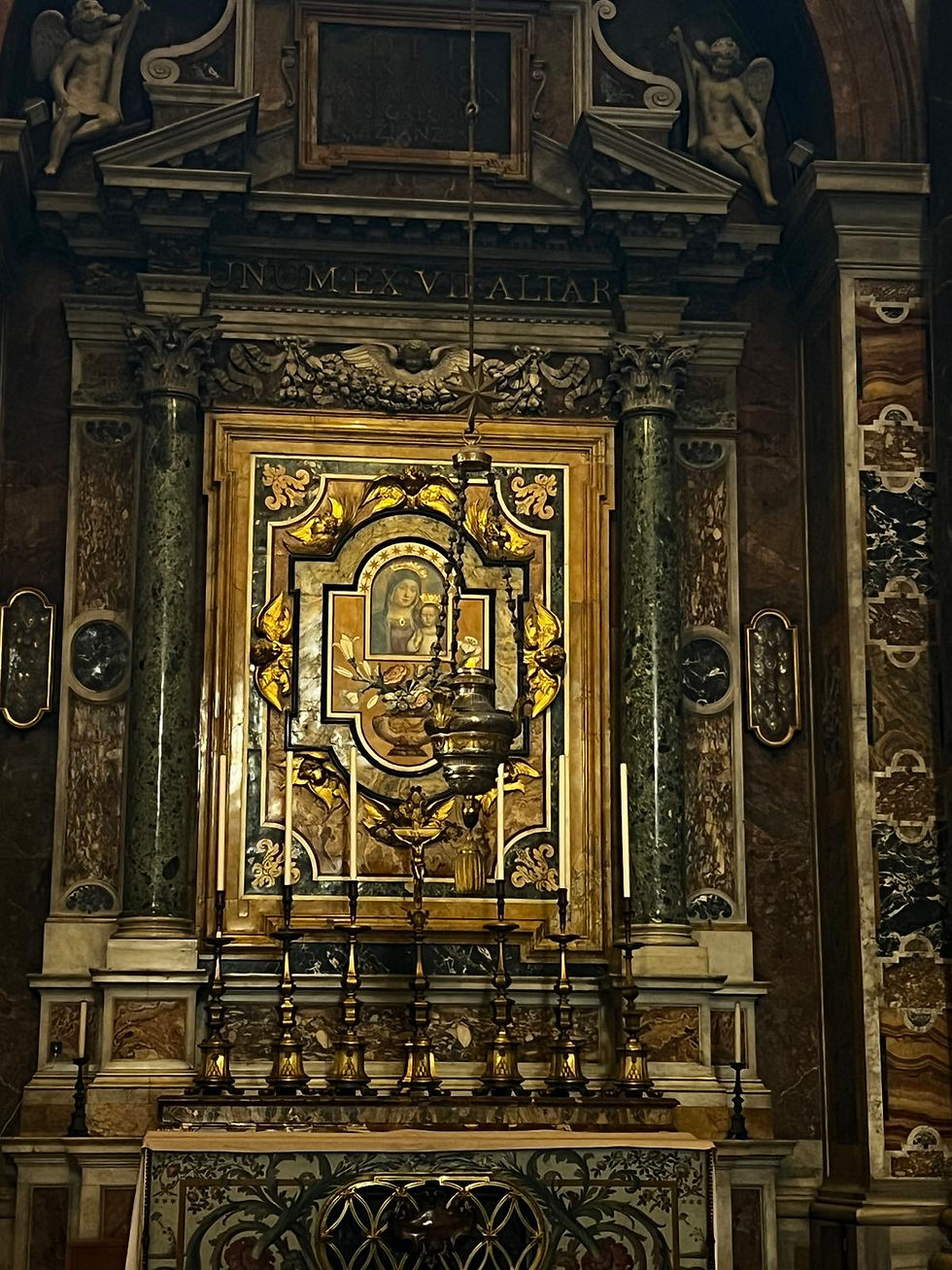
Altar of Our Lady of the Column (Madonna della Colonna)
Day 3: Piazzas, Fountains, and Endless Gelato
Dedicate your final day to the classic art of il dolce far niente (the sweetness of doing nothing), combined with a lot of walking!
What to See: Map out a walking route connecting the Trevi Fountain, the Pantheon, and Piazza Navona.
Experiences: Rome is a city best explored by getting lost in its narrow side streets. Stop for an espresso (remember to drink it standing at the bar like a local), visit local boutique shops, and eat your body weight in artisanal gelato.
Stay Connected: Having an AI application running seamlessly in the background via your AussieRoam connection ensures you can find the highest-rated gelaterias away from the main tourist squares.

Trevi Fountain
Why You Need an AussieRoam eSIM for Italy
Trying to navigate an unfamiliar city using patchy public Wi-Fi is stressful and leaves your personal data vulnerable. By choosing an eSIM for Italy from AussieRoam, you secure a fast, reliable, and secure connection on premium Italian mobile networks.
It takes less than two minutes to set up: buy online before you leave Australia, scan the QR code to install the profile on your device, and turn it on when you arrive. Keep your original Aussie number active for WhatsApp and dual-verification texts, and use your affordable local data package for everything else.
Ready to roam? Find the perfect Head to the AussieRoam eSIM plan for your European adventure!


